
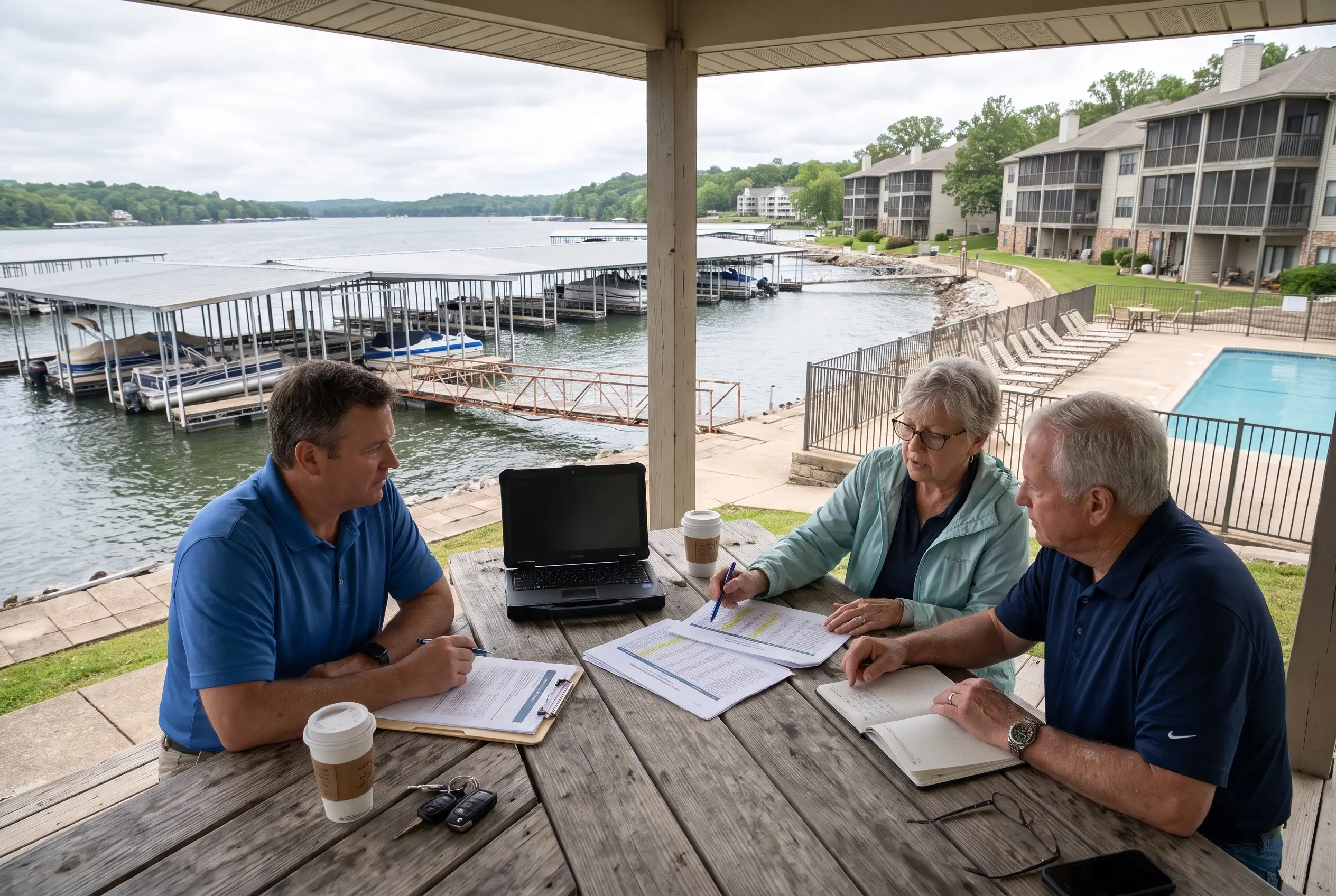
Peak season in Osage Beach brings heavy traffic to shared docks and waterfront amenities, and that wear adds up faster than most reserve studies ever anticipated when they were first written. A seawall or dock system built to handle moderate use for a few decades suddenly faces a different kind of pressure once rental turnover and boat traffic climb year after year.
Volunteer board members trying to keep pace with that wear, on top of everything else covered in our piece on decision overload on boards, often have little room left to catch a funding gap before it becomes a special assessment. Here’s what’s driving these costs higher across Osage Beach and what a board can do to get ahead of the next one.
Key Takeaways
- The national median special assessment reached a record $1,100 per door in 2025, touching more than 75 million Americans living in HOA communities.
- Insurance premiums nationwide, including sharp increases in storm-exposed states, are reshaping what Osage Beach associations budget for master policy renewals.
- Reserve funds set years ago rarely reflect today’s repair and material costs, leaving many boards to close the gap with special assessments.
- Delayed maintenance on docks, seawalls, and shared amenities almost always costs more once high water or equipment failure forces the issue.
- Boards that document their reasoning and communicate it early see far less resistance when an assessment vote comes up.
Why Do Reserve Funds Fall So Far Behind What Repairs Actually Cost?
Most reserve schedules were set years before material costs and labor rates climbed to where they sit today, and few boards have gone back to adjust the numbers. That gap widens every cycle a community keeps dues flat.
When dues stay the same for several budget years, the reserve account quietly loses ground, and nobody notices until a dock system, pool, or shared structure needs work the fund can’t cover. According to Forbes, the national median special assessment hit a record $1,100 per door in 2025, a figure that reflects how widespread this underfunding has become nationwide.
An Osage Beach Example Worth Learning From
One waterfront association in Osage Beach illustrates this well. Its reserve study flagged an aging seawall section for two straight years, but the board kept dues flat each cycle to avoid pushing costs onto part-time owners who rent out their units seasonally. The board treasurer at the time, later admitted the group assumed the wall would hold through another peak season.
A stretch of unusually high water that spring pushed past the compromised section, flooding a section of shared dock access and damaging nearby landscaping. The repair bill came in well above what a planned project would have cost, and the board had to levy a special assessment of several thousand dollars per household within 60 days.
How Much Pressure Is Rising Insurance Adding to the Picture?
A significant amount, and the pressure isn’t limited to coastal regions alone. Master policies covering shared buildings, docks, and common structures are renewing at sharply higher rates across much of the country as carriers reassess risk more broadly.
A few patterns show up consistently across communities facing this pressure:
- Master policy renewals often land well above what was budgeted the prior year.
- Waterfront exposure and shared amenities tend to draw closer scrutiny from underwriters.
- Associations without a reserve cushion end up passing the full increase straight to homeowners.
Florida illustrates just how far this trend can run. According to a WINK News report citing LendingTree data, Florida homeowners now pay an average of $2,691 a year in premiums, with rates up nearly 50 percent since 2020. Osage Beach associations aren’t seeing identical figures, but the same underlying pressure, insurers pricing in more risk everywhere, reaches this community too.
Does Postponing a Repair Really Raise the Final Cost?
Almost without exception, the underlying issue keeps deteriorating while a board weighs its options. Preventive maintenance slipping through the cracks tends to show up right before a manageable fix turns into an expensive emergency, especially with heavy seasonal use on docks and shared facilities.
A board that delays a routine inspection to avoid conflict with renters or part-time owners often discovers the problem again months later, further along and far costlier to address than it would have been with earlier attention.
How Does Financial Reporting Shape the Way Homeowners React?
Consistent, itemized reporting shapes whether residents view an assessment as fair or feel caught off guard by it. A board that shares numbers regularly throughout the year has a far easier time explaining a major expense when it eventually arrives.
Accurate reports fueling tension can surface even when the figures themselves are correct, since board members often read the same reserve balance and reach very different conclusions about what it means. A few warning signs tend to appear before a funding gap becomes a surprise bill:
- Monthly statements arrive late or get skipped for a cycle or two.
- Reserve balances get discussed verbally in meetings but never show up in writing.
- Vendor invoices surface that nobody budgeted for months earlier.
Routine scheduled maintenance inspections help catch dock, seawall, and structural wear early, often while repairs still fit comfortably inside the regular budget.
Why Does Rigid Rule Enforcement Make an Assessment Harder to Accept?
Homeowners who already feel shut out of board decisions rarely give the benefit of the doubt once a large bill arrives. The enforcement fairness breaking point tends to resurface in predictable ways once an assessment notice goes out.
She might question the math even when it’s accurate, bring up an unrelated rule dispute from months earlier, or simply delay payment out of frustration with how the board has handled things in general. That resistance is usually rooted in feeling unheard long before the assessment ever arrived.
What Can a Board Do Before Proposing an Assessment?
Preparation tends to matter more than the dollar amount itself, and a few concrete steps make the process far smoother:
- Pull the current reserve study and compare it against actual account balances.
- Collect updated bids on the project instead of relying on older estimates.
- Review delinquency rates, since unpaid dues often widen the shortfall a board is trying to close.
- Share the full reasoning with homeowners well before the vote takes place.
Boards managing this process without outside support can turn to the board member resource hub for guidance on structuring the vote and communicating it clearly, especially in a community with a mix of full-time and seasonal owners.
FAQs about HOA Special Assessments in Osage Beach, MO
Do special assessments in Osage Beach typically involve dock or waterfront repairs?
Many do, since shared docks, seawalls, and waterfront amenities see heavy seasonal use and weather exposure, making them common drivers of special assessments in this lake community compared to inland associations.
How does a mix of full-time and seasonal owners affect how an assessment gets paid?
Most governing documents apply the same obligation regardless of occupancy status, though boards sometimes offer payment plans to ease the burden on owners who rely on rental income to cover the cost.
Can a special assessment be challenged if a homeowner believes the repair wasn’t urgent?
Homeowners can request a formal review, ask for the reserve study and updated bids behind the decision, and raise concerns at a meeting before pursuing mediation or legal counsel if unresolved.
What happens if high water levels cause recurring damage to the same community structure?
Boards facing repeat damage often need to budget for a more permanent fix rather than repeated patch repairs, which can mean a larger one-time assessment instead of smaller recurring ones.
Is there a way to reduce how often this community needs special assessments?
Updating the reserve study regularly, adjusting dues incrementally instead of holding them flat, and scheduling proactive dock and seawall inspections all help reduce how often a board needs to rely on special assessments.
What Comes Next for This Lake Community
High water, aging docks, and insurance renewals will keep testing reserve funds that were never built for today’s repair costs, and no Osage Beach community is immune just because last season went smoothly. The gap between what a board hopes will hold and what the inspection actually finds tends to close at the worst possible time, usually right before the next busy rental season starts.
PMI Ozark Professionals gives Osage Beach boards the kind of financial visibility that makes tough calls easier to explain to a mix of full-time residents and seasonal owners alike. Take a look at your numbers now, while there’s still room to plan instead of react.